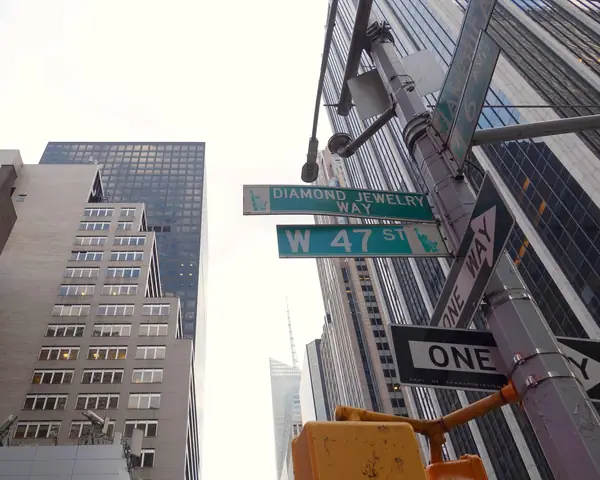
Fifth to Sixth Avenue
W 47 St Diamond District
Diamond buyers in NYC, from 47th Street to all five boroughs
Loose stones, engagement rings and diamond jewelry, judged the way the trade judges them: cut, color, clarity and carat. Tell us about the diamond and get an offer from an independent New York buyer.
- Loose stones and set diamonds
- GIA, IGI or no report
- All five boroughs

- W 47 StThe Diamond DistrictWest 47th Street, between Fifth and Sixth Avenues in Midtown.
- 5 boroughsAll of New York CityManhattan, Brooklyn, Queens, the Bronx and Staten Island.
- 4CsHow a diamond is judgedCut, color, clarity and carat weight, the terms GIA set out.
- One number, answered in New YorkFree to ask, and you never have to sell.
The four Cs
What a diamond buyer looks at, and what you can sell
Diamond professionals describe every stone on four scales, the same ones printed on a grading report. Know roughly where yours sits on each and any offer is far easier to follow.

Color
- DEF
- GHIJ
- KLM
- N to R
- S to Z
- D to F colorless
- G to J near colorless
- K to M faint
- N to R very light
- S to Z light
GIA grades color against masterstones on its D to Z scale. D is the top of the scale.
Clarity
- FL
- IF
- VVS1
- VVS2
- VS1
- VS2
- SI1
- SI2
- I1
- I2
- I3
- FL, IF flawless, internally flawless
- VVS1, VVS2 very, very slightly included
- VS1, VS2 very slightly included
- SI1, SI2 slightly included
- I1 to I3 included
Flawless is the top clarity grade: nothing visible to a skilled grader under 10x magnification.
Cut
- Excellent
- Very Good
- Good
- Fair
- Poor
- Excellent the top grade for a round brilliant
- Very Good, Good bright, with small losses of light
- Fair, Poor light leaks out through the sides
Cut is the one C that people make. It is the reason two stones of the same weight can look so different.
Carat weight
1 carat=0.2 grams=100 points
- 0.50 ct 50 points, a half carat
- 0.25 ct 25 points, a quarter carat
- 1 carat 200 milligrams
A carat is 200 milligrams and a point is one hundredth of a carat, so 25 points is a quarter carat.
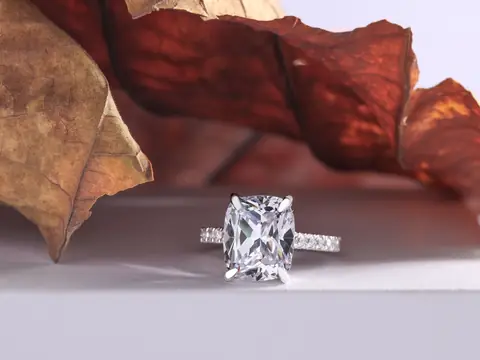
Sell diamonds in NYC
How a diamond sale runs in New York, step by step: the report, more than one written offer, your ID and the rules a licensed buyer follows.
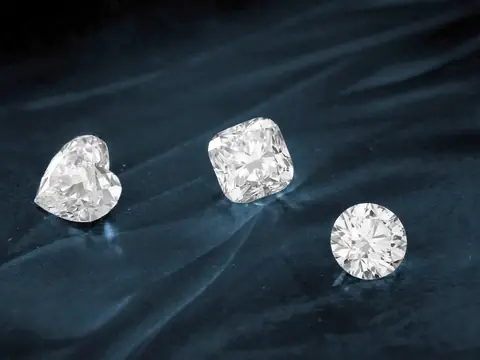
Loose diamonds
A stone out of its setting, with a GIA or IGI report or with none. How to read the report before a buyer reads it for you.
The Diamond District
A seller’s guide to West 47th Street: where it is, how to get there, how it grew, and how to compare offers on one block.
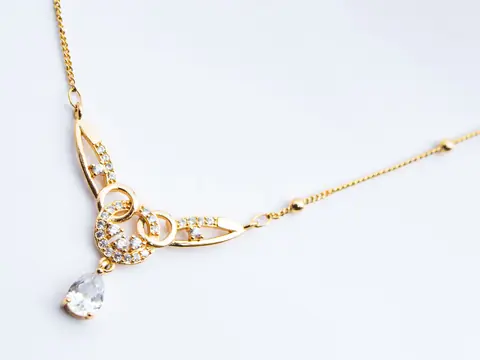
Gold with your diamonds
Settings, chains, broken pieces and old mounts. Karat stamps, troy weight and the scale rule every NYC gold buyer works under.
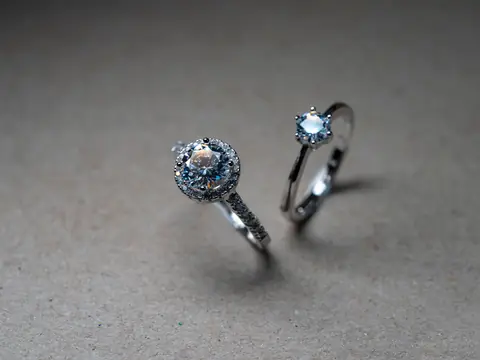
Appraisal before you sell
What an appraisal is for, why it is not an offer, and how it differs from a grading report when you are about to sell.
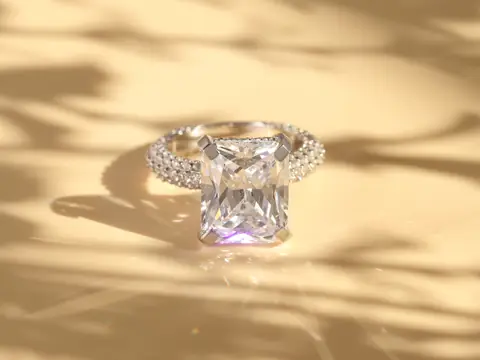
Diamond resale value
Why an offer sits below the store price, whether diamonds hold value, and what moves an offer.


How it works
Four steps along the block
Nothing is sold until you say yes to an offer.
Step 1
Call or send the details
Say what you have, the carat weight if you know it, and whether there is a grading report.
Step 2
An independent buyer replies
Your details go to an independent diamond buyer in New York, who comes back to you by phone or email.
Step 3
The NYC rules apply
A licensed buyer checks your photo ID and signature, weighs gold on an approved scale and records the sale.
Step 4
A written offer: you decide
Ask for the offer in writing. Take it, compare it with another, or keep the diamond.
Five boroughs
Diamond buyers across New York City
New York’s diamond trade is concentrated on one block of West 47th Street in Midtown, and the line takes calls from all five boroughs. Each borough has its own page.
Manhattan
Midtown, the Upper East Side, the Upper West Side, Harlem, Chelsea, Lower Manhattan
Brooklyn
Park Slope, Brooklyn Heights, Williamsburg, Bay Ridge, Flatbush
Queens
Astoria, Forest Hills, Flushing, Jackson Heights, Bayside
The Bronx
Riverdale, Fordham, Pelham Bay, Throgs Neck
Staten Island
St. George, New Dorp, Great Kills, Tottenville
Diamond buyers NYC
Selling a diamond in New York, plainly
Most people sell a diamond once in their lives. It might be an engagement ring from a marriage that ended, a pair of studs from a grandmother, a loose stone left over from a reset, or a tennis bracelet nobody wears. The buyer on the other side of the counter does this every day. This site exists to close some of that gap: to explain what diamond buyers in NYC look at, how an offer is built, and which New York City rules protect you, and then to put you in touch with an independent buyer when you are ready.
Diamond Buyers NYC is an independent referral service, not a buyer, pawnshop or dealer. When you call or send the form, your details go to an independent buyer in New York, who makes any offer. We do not grade, test, value or buy anything ourselves, and nothing on this site is a price.
If you only read one other page, make it the step-by-step guide to how you sell diamonds in NYC: what to have ready, how many offers to get, and what a licensed buyer must do at the sale.
Call to tell an independent New York buyer about your diamond. Asking is free.

Reports
What a grading report tells a buyer
A grading report is a laboratory’s description of one stone. GIA, which developed the grading system the trade uses, describes a diamond by its four Cs: clarity, color, cut and carat weight. IGI is another laboratory that issues diamond reports. A report does not put a price on the stone, but it answers most of the questions a buyer would otherwise have to answer at the counter, and it lets the buyer check the stone against the paper.
- Carat weight. Measured exactly. A carat is 200 milligrams, and the trade also counts in points, one hundredth of a carat each.
- Color. GIA grades color against a set of masterstones on its D to Z scale.
- Clarity. How many internal and surface marks a grader sees. Flawless, the top grade, means none are visible to a skilled grader under 10x magnification.
- Cut. How well the stone is proportioned and finished, which is much of what makes it bright.
- Natural or laboratory-grown. Under the FTC’s jewelry guides, a lab-grown diamond must be described clearly as laboratory-grown, laboratory-created or similar. It is not a mined diamond, and a report says which one you have.
GIA offers a Report Check on its website where a report number can be looked up, and it is worth doing before you sell. The article on how to check your GIA report walks through it. A stone with no report can still be sold: older stones and the small diamonds in a piece of jewelry often have none. The page on how to sell loose diamonds covers both cases.

Value
Why an offer is not the price you paid
The most common surprise in selling a diamond is the distance between what it cost in a store and what a buyer offers. A retail price includes the store’s costs and margin. A buyer pays what the piece is worth to them to resell, reset or melt, so an offer is lower than what was paid in a store. That is true of every buyer, everywhere, and no honest one will tell you otherwise. The guide to diamond resale value goes through what pulls an offer up or down.
A ring or a piece of jewelry is two things at once: the stones and the metal they sit in. The diamonds are judged on the four Cs. The gold or platinum is weighed, and its value starts from its melt value: the weight in troy ounces, times its purity, times the day’s spot price. If you are selling settings, chains or broken pieces as well, the page on how to sell gold in NYC explains karat stamps and troy weight.
An appraisal is not an offer
An appraisal states a value for a stated purpose, often insurance, and the appraiser is not offering to buy. Jewelers Mutual, an insurer, suggests getting one first and using it as a guideline when you sell. Read about diamond appraisal in NYC before you pay for one.

NYC rules
What New York City requires of a diamond buyer
New York City regulates the businesses that buy used jewelry and precious metal, and the rules are some of the best protection a seller has. They come from the NYC Department of Consumer and Worker Protection (DCWP), and every licensed buyer in the five boroughs works under them.
- A licence. A business that buys or sells used goods in the city must hold a DCWP Secondhand Dealer General licence. Buying exclusively online is exempt.
- It is on the wall. The licence and DCWP’s complaint sign must be posted where customers can see them, and receipts must show the licence number. You can ask to see it.
- A scale you can read. A buyer of gold, silver, jewelry or other precious metal must have a scale and tell you the troy weight of the metal. The scale must be a type approved by the New York State Department of Agriculture and Markets, reading to 0.01 troy ounce or finer.
- Your ID and signature. You show official photo ID, the buyer records its type and number, and you sign in front of the dealer. A copy of an ID is not enough.
- A record of the sale. The buyer records the item, its marks, the metal and the stones, and your name and address, and keeps that record for three years.
- No minors, and a 15-day hold. Buyers cannot buy from minors, and used items, jewelry included, cannot be resold within 15 days of purchase.
Lending money against jewelry is a different business: it needs a separate DCWP pawnbroker licence. Selling is final; a pawn is a loan. This site is about selling.
Bring with you
- Photo ID: in New York City a buyer must see it and record it
- The grading report, if there is one
- Receipts or appraisals
- The box and papers for a designer piece
- Every piece you might sell, so each offer covers the same things
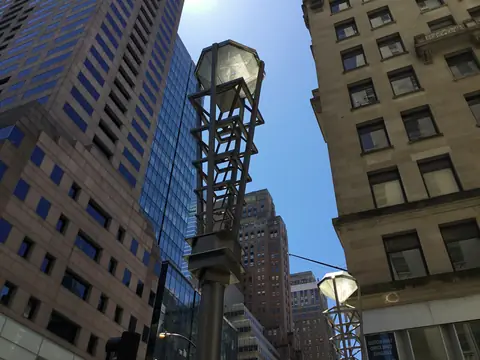
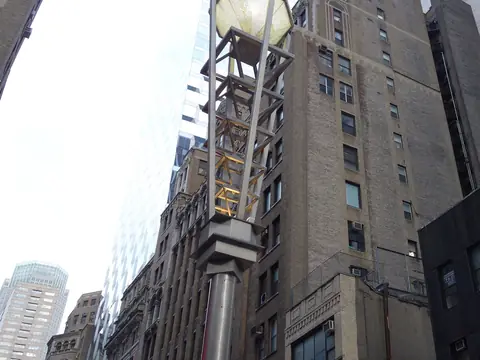
Diamond District lamp posts, each topped with a glass diamond
The district
Why West 47th Street
New York’s diamond trade sits on West 47th Street between Fifth Avenue and Sixth Avenue, the Avenue of the Americas. The 47th Street Business Improvement District describes it as the place with the largest concentration of diamond and jewelry related companies and retailers. The trade began around 1790 on Maiden Lane in lower Manhattan, moved to Canal Street and the Bowery in the 1920s, and came to 47th Street after real estate broker Fenimore Goode began building for the diamond trade there in 1923. It grew in the 1940s, when European Jewish refugees, among them diamond merchants and artisans, opened businesses on the block.
For a seller, a block of competing buyers is useful: it makes a second written offer easy to get. The guide to the Diamond District NYC sellers use covers the subway and bus lines, what to bring and how to compare offers there.

Questions
Questions sellers ask
Short answers to what people ask most before they sell a diamond in New York. More are on the questions page.
Prices and offers
Is Diamond Buyers NYC a diamond buyer?
No. Diamond Buyers NYC is an independent referral service, not a buyer, pawnshop or dealer. When you call or send the form, your details go to an independent buyer in New York, who makes any offer.
How much will I get for my diamond?
Nobody can say without seeing it. An offer starts from the four Cs, whether the stone is natural or laboratory-grown, and whether it has a report, and for a ring the metal is weighed and valued on its own. Ask for the offer in writing so you can compare it.
Reports and grading
My diamond has no grading report. Can I still sell it?
Yes. Older stones and the small diamonds in jewelry often have none. The buyer judges the stone without one, and you can still compare written offers.
How do I check a GIA report?
GIA offers a Report Check on its website where a report number can be looked up. Do it before you sell. See checking a GIA report.
Gold and settings
Is the ring valued with the stone?
The diamond is judged on the four Cs and the setting is weighed for its metal. In New York City a buyer of precious metal must tell you its troy weight.
Is it better to pawn or sell a diamond?
They are different things. A pawn is a loan against the piece, and in New York City it needs a separate DCWP pawnbroker licence. A sale is final. Decide which you want before you go in.
Selling in New York
Where is the Diamond District?
On West 47th Street between Fifth and Sixth Avenues in Midtown Manhattan. The nearest subway stop for the B, D, F and M is 47-50 Streets Rockefeller Center.
What do I need to bring to sell a diamond?
Official photo ID, which a New York City buyer must see and record, plus the grading report if there is one and any receipts or appraisals. You must not be a minor.
Selling a diamond in New York? Start with one call.
Call the line, or tell us about the diamond, and an independent buyer replies. Asking is free and you never have to sell.